
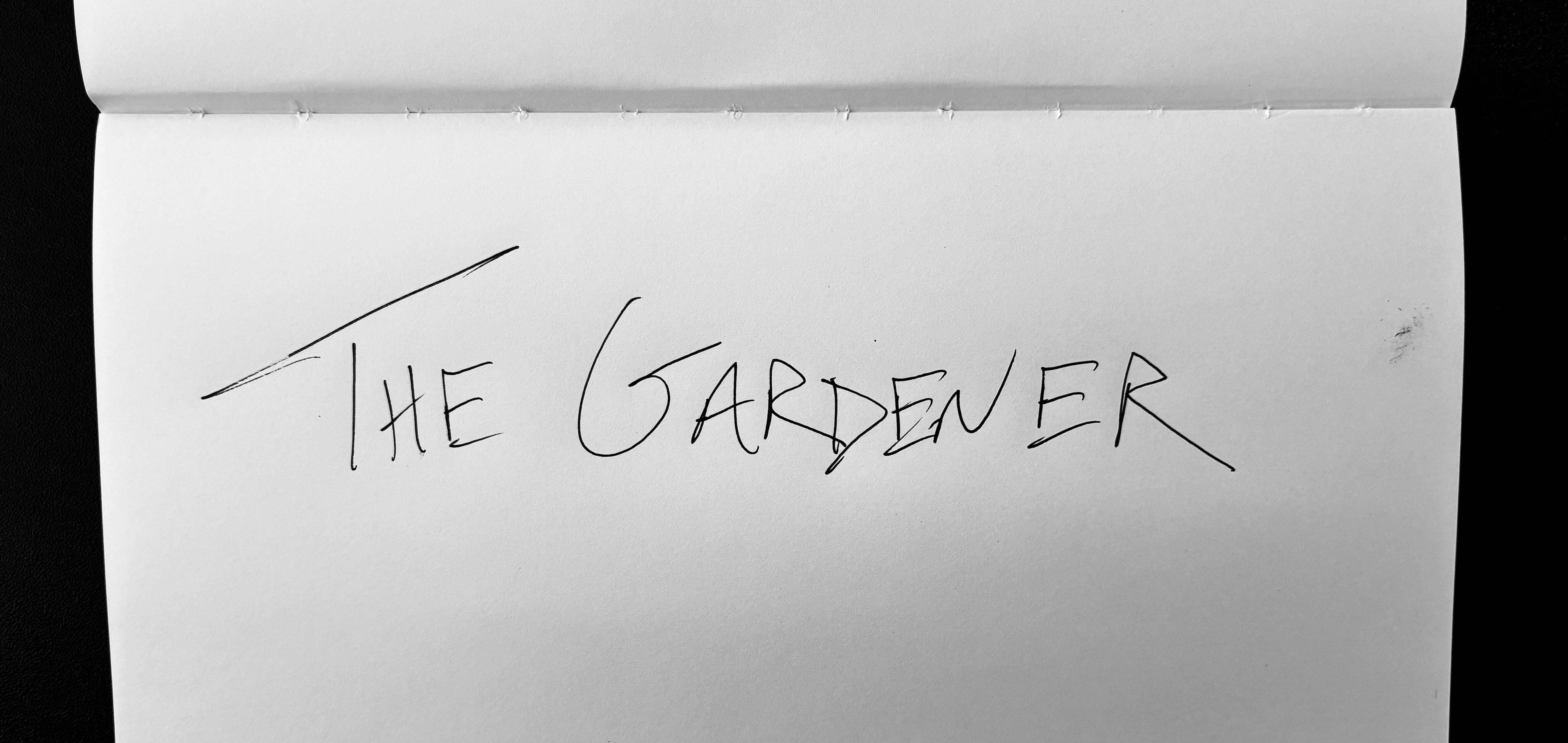
The Gardener
An Easter reflection on making room and practicing belonging

Here’s what I preached last week at my little church in Maine. (And here’s the story we read before I preached, and here’s a video of me doing the preaching).
Jesus was a nuisance.
A rabble-rouser. A contrarian. A bur in the saddle of the status quo.
As we saw on Palm Sunday, he challenged the politics of the governing authorities with subversive acts of resistance and street theatre.
As we hear him doing throughout the gospel stories he calls out the hypocrisy of the religious leaders who use their influence to justify injustice and enrich themselves.
And remember when he flipped the tables in the temple? That’s because he had a beef with the economic arrangements that made it necessary and unavoidable for devout people of good faith to buy into the same corrupt systems that deepened and prolonged their own experiences of oppression.
Jesus did not approve of these things. Jesus was a nuisance. An inconvenience to the corrupt and oppressive figures and cultural forces of his day. And he invited a small band of followers to be an inconvenience with him.
His followers did their best, up to a point. But when it got dire, there at the end, most of them ran for the hills.
Because it takes a lot of courage to be an inconvenience.
Especially when those who are inconvenienced have the power to simply erase the sources of their annoyance.
That’s what crosses were for.
The Roman authorities used crucifixion as a form of terror to intimidate the masses and erase any idea of resistance to their rule and domination.
After Jesus was executed by the empire for being a nuisance, some of his secret admirers wrapped his body up in burial cloths and anointed it with fragrant spices, and then placed his body in a spare tomb, in a garden just outside the city gates.
The oppressors had succeeded.
They erased Jesus—an errant and erratic rabble-rousing first century Palestinian Jew. They intimidated and scattered his followers. All with a few well-placed spikes and a splintery beam of wood suspended from a tree.
–
But then something happened. And kept on happening.
In the days following his death by crucifixion Jesus kept showing up. Paying people surprise visits. Dropping in on his frightened followers in locked rooms. Walking dusty roads with unsuspecting pilgrims. Making breakfast for his friends on the beach while they’re out fishing.
And the scene with Mary Magdalene in the garden.
In the gospel of John this is the first surprise appearance of Jesus after his crucifixion.
The way it’s told, Mary—who was arguably Jesus’ most devout and courageous follower—seems to mistake Jesus for the gardener.
It’s no wonder. She was witness to his torturous death. When others fled, she remained close enough to keep her eyes on Jesus even as he expired on the cross.
But, you know, sometimes in our grief, in our loss—even in the midst of fear and uncertainty—our senses are heightened, and it’s possible to see the world with greater clarity than in our usual day-to-day ways of seeing and sensing the world.
It makes me wonder if Mary maybe saw something true when she mistook him for the gardener.
What does a gardener do, after all?
Grows things, right?
But how?
A gardener doesn’t actually do the growing.
A gardener prepares the ground.
A gardener plants the seeds.
And then a gardener steps back, and makes room for things to grow.
In the company of other growing things.
–
Most theologians agree that there is a distinction between Jesus before the resurrection and Jesus after the resurrection.
That’s not to say that there’s not continuity between the rabble-rousing Jesus of Nazareth and the garden-dwelling Jesus as the Christ. But of course he changed.
Follow the story: Jesus just walked through the ordeal of crucifixion, confrontation with mortality, and his stubborn refusal to be estranged from God when everything was stripped away—that series of experiences… well, that would certainly change a man.
Before the ordeal of Holy Week he was Jesus of Nazareth, who was born amidst scandal, apprenticed as a carpenter, was baptized in the muddy waters of the Jordan River, tempted by devils in the wilderness, and called by God to recruit followers.
He was Jesus the Rabbi, the life guide, the reluctant Messiah, appointed and anointed to articulate and demonstrate the vision of God’s upside down reign on earth.
Jesus of Nazareth walked toward death with his eyes wide open. He gave himself wholly to the mission of turning the world upside down with a counterintuitive understanding of power and a confounding practice of love.
Then we have the ordeal of Holy Week.
After that ordeal—the sacred meal on Thursday night, the betrayal and arrest, the flogging and the crucifixion on Friday, the long, empty day of Saturday—and now, Sunday morning, we encounter Easter Jesus, Jesus as the Christ, the resurrected Jesus.
Jesus the gardener.
Like a gardener, the Easter Jesus is here, beyond anything else, to make room.
–
Jesus says something to Mary that’s very curious.
“Don’t cling to me,” he says. “I haven’t ascended yet to the Father.”
The ascension that Jesus teases here comes later in the story. After the Easter Jesus spends several weeks making all of these surprise appearances to his followers, he gathers a bunch of them up and he inspires them—meaning, he gives his followers a holy spirit of communion and care and courage.
“I’m leaving you,” he says. “But I’m not leaving you alone.”
Then he breathes out his spirit on them. And then he does leave. Ascends to the heavens to dwell in intimate union with God.
–
“Don’t cling to me,” he said to Mary, anticipating his ascension.
What could that mean? Why this redirection of however it was that Mary was holding on to Jesus? What wisdom is available to us here?
We can speculate about what it was that Mary might have been clinging to…
Maybe she wanted it to stay the way that it was before, with Jesus leading them across the countryside, instructing them, guiding their every move.
Maybe she wanted Jesus to have the answers, give the answers, be the answer to all of her doubts and worries.
Maybe she wanted a version of the story where the faithful and the innocent do not suffer and where the abusers are brought to justice.
Maybe Mary was clinging to a vision of radical justice, or maybe it was simply her nostalgia for a man she loved.
We don’t know for sure. But we can certainly identify what it is that we cling to when love leads to loss, when death dishes us grief, when life disappoints us, and uncertainty overwhelms us.
Maybe we too just want to go back to what was familiar, the way things used to be, or at least how we remember them.
Maybe we cling to a familiar Jesus, or a comfortable faith that we create in our image and understanding of strength; the promise of victory and of the power to overthrow those who are treading on our dignity.
Of course we want a version of the story where good people escape harm and bad actors get their just deserts.
“Surely, Jesus, if you can walk through the threshold of death, and back to us again, surely you can give us the good version, the easy version, the victorious version of the story. The one where Jesus saves the world.”
That’s what his followers were expecting, after all.
Then they watched him go through the ordeal of Holy Week. And they lost hope.
Then he came back to them, and their hope flared again.
But he said: “Don’t cling to me.”
And he left them, with a spirit and a prayer.
—
We want to cling to something that will saves us from grief, disappointment, loss, and uncertainty.
But that’s not how Jesus saves.
What if victory over the sting of death and the disappointments of life is not the ultimate gift of faith inspired by Jesus?
What if the gift that the Easter Jesus ultimately gives is that he makes room?
Like a gardener preparing the soil, planting the seed and then breathing a prayer, saying to the communion of his followers:
“Now, everything you need is among you, you just have to call it forth.”
Jesus didn’t save the world once upon a time. Jesus is still saving the world, because he made room. For you. For us.
We are what the gardener makes room for.
Room for us to grow—individually and together.
Room for each of us to contribute.
Room for you to make your most caring and courageous contributions to our shared project of weaving moments of salvation into our everyday interactions.
What might that look like for you to sprout in the garden of creativity, of love, of peace and justice? To overpower hate and arrogance with an everyday act of service and love?
What might it look like for you to have the courage to integrate your grief or the compassion to be with another in their loss?
How might we navigate the disappointments of life and the uncertainties of faith, together, with grace?
That’s the question this Easter morning.
One place we can start is to weave together our contributions into a collective vision for this world where neighbors gather with neighbors and participate in the simple, sacred act of slowing down to break bread together—not because we all necessarily get along, or agree about everything—but because something as normal as sharing a meal is a radical way to simply say yes to life.
This is where atonement takes place. Not so much on the cross once upon a time, but at the table every single day. And, remember, a place at the table isn’t something you earn; it’s not a reward for faithfulness. The table’s already set, there’s already room. Look around, and you’ll see that it is so.
There’s not anything you have to do. It’s something you get to do: To say yes to the everyday invitations to participate in the practice of belonging.
What’s your yes today?